Writing a great brief
Capture the hypothesis, pain point, test variable, budget, and creative direction so your team produces on-target creatives.
A brief is the heart of every task. It tells your team exactly what to make and why — so the creatives that come back are on-target instead of a guessing game. A strong brief is the single biggest driver of good output, and it takes only a few extra minutes to write one.
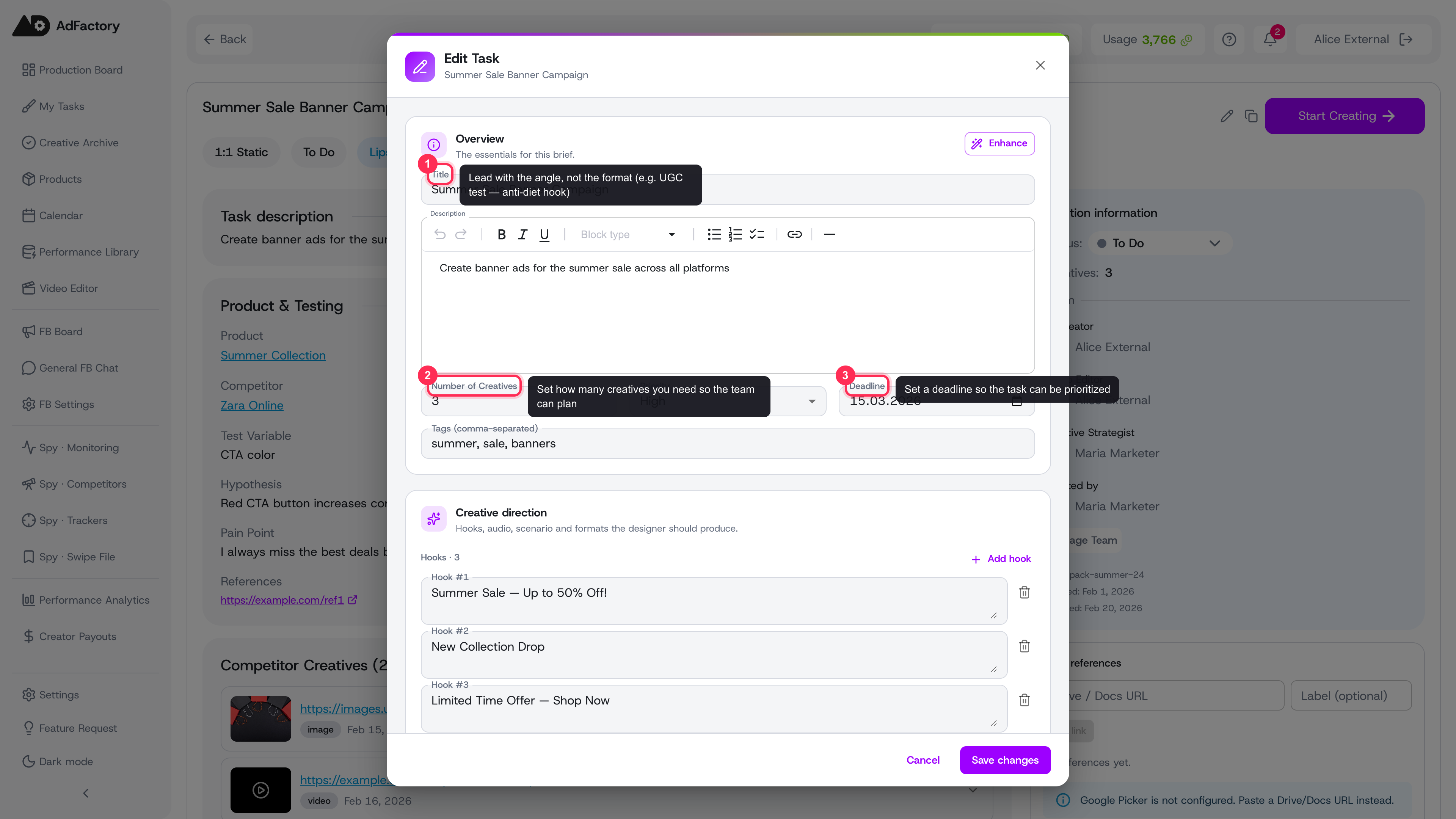 The brief Overview: name the task by its angle and set count, priority and deadline
Why the brief matters
Every creative your team produces traces back to the brief you wrote when creating the task. The more clearly you frame the hypothesis and the angle, the less back-and-forth you'll have in the review pipeline later. Vague briefs lead to rework; specific briefs lead to ads you can ship.
The fields that make a great brief
When you create or edit a task, you can fill in:
- Title — a short, descriptive name. Lead with the angle, not the format (e.g. "UGC test — anti-diet hook").
- Hypothesis — what you believe will work and why. State the bet plainly: "We think a problem-first hook will beat a feature-led one for cold traffic."
- Pain Point — the specific customer frustration the ad speaks to. The sharper this is, the better the messaging.
- Test Variable — the one thing this task is testing (hook, format, audience angle). Isolate a single variable so your results are readable.
- Hooks — the opening lines you want tried. Add several to give creators options.
- Audio Text — voiceover or script lines for video creatives.
- Video Scenario — a scene-by-scene description of how the ad should play out.
- Creative formats and count — which formats (9:16, 1:1, etc.) and how many creatives you need.
- Budget and deadline — set expectations so the team can prioritize.
- References — links or notes pointing to examples to model.
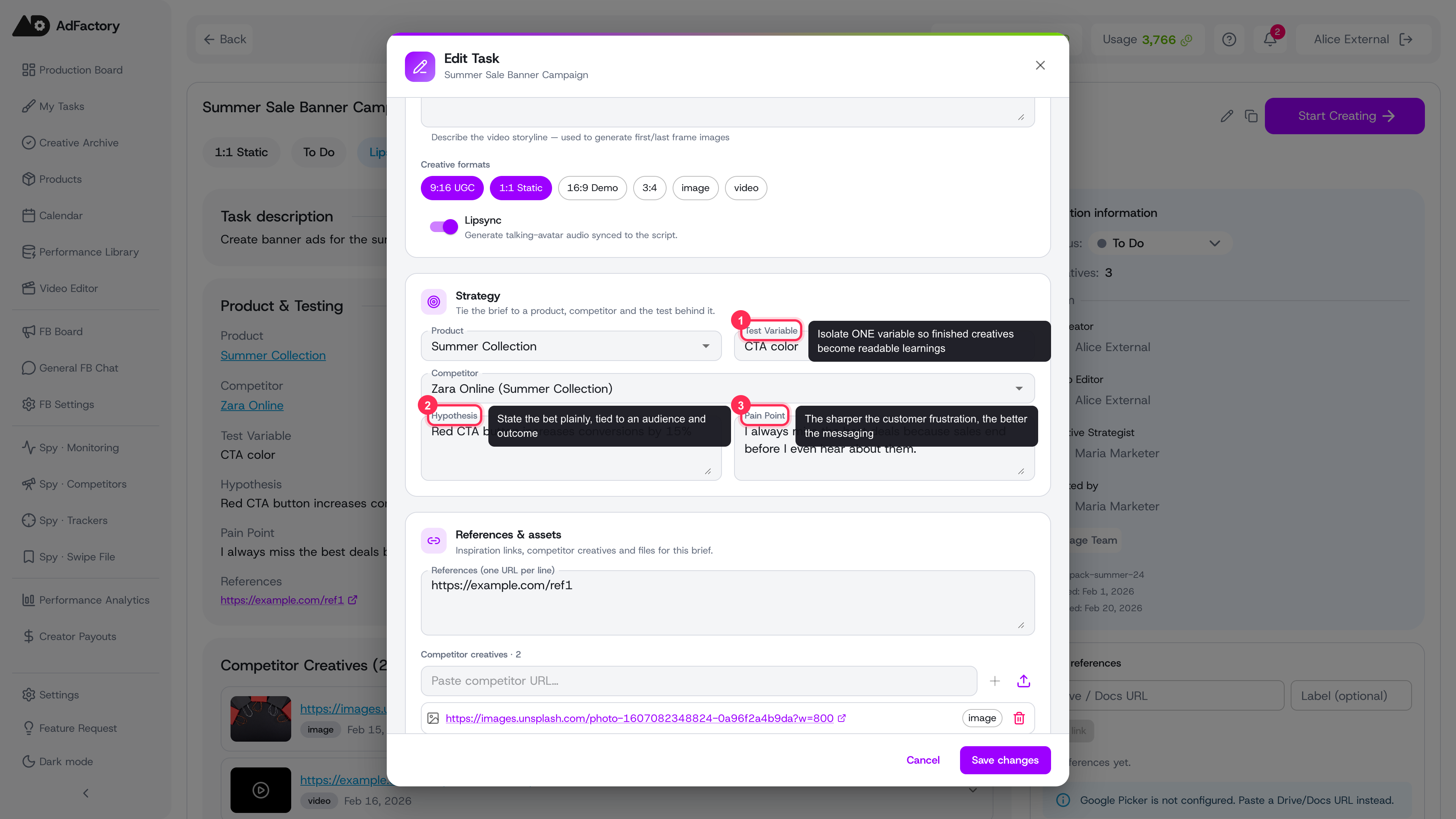 Frame the bet: a concrete hypothesis, a sharp pain point, and a single test variable
The creative-direction fields are what your creators actually produce against — give them several hooks, the voiceover text, and a scene-by-scene scenario.
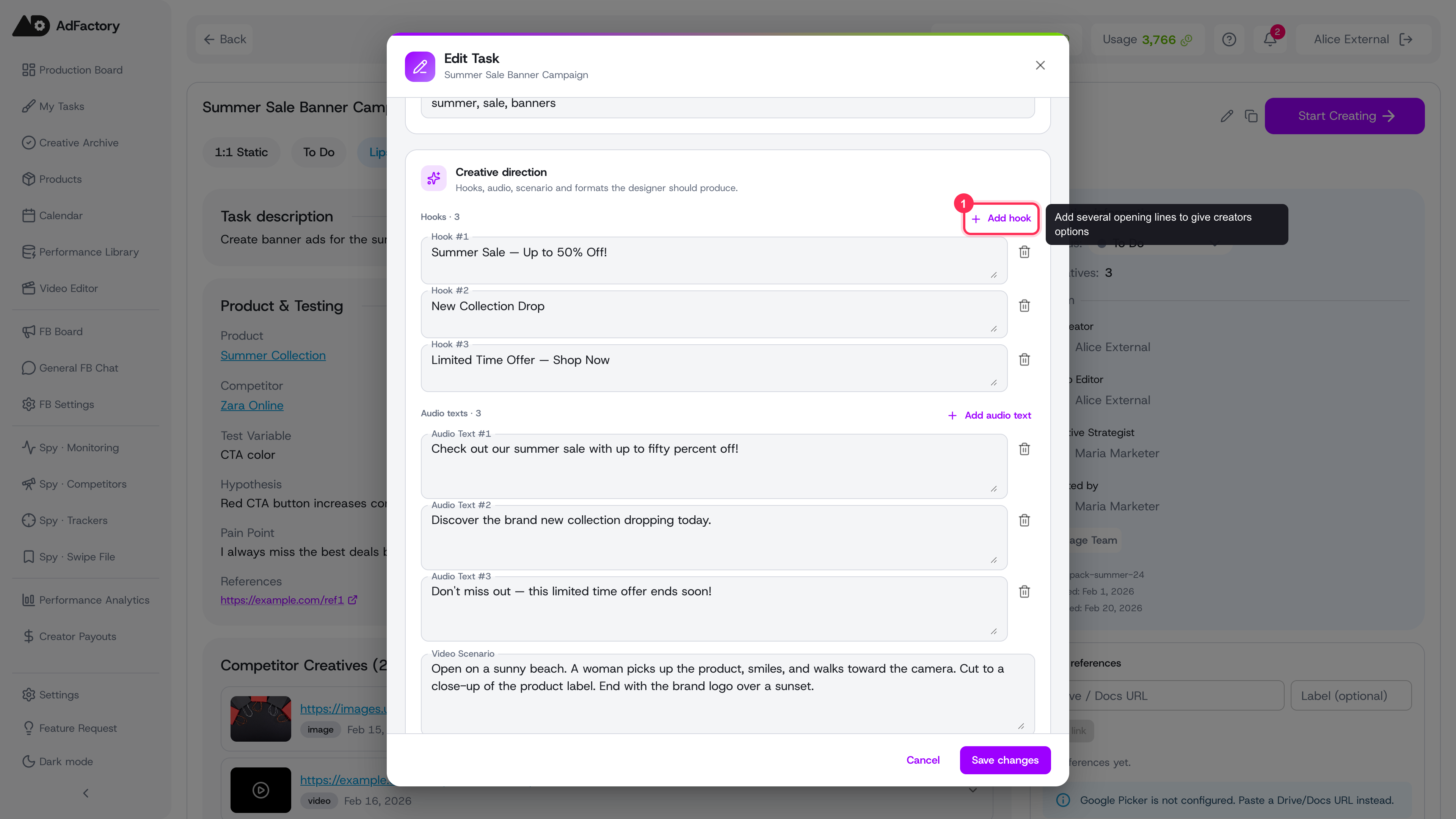 Creative direction: give creators hooks, voiceover text, and a scene-by-scene scenario
Tips for sharper briefs
- Pull from the product. A complete product profile gives the AI and your team the audience, positioning, and psychology that power on-target output.
- Test one thing at a time. A clear Test Variable turns finished creatives into real learnings.
- Show, don't just tell. Attach references or competitor examples found with the Spy Agent so creators know exactly what to model.
- Be concrete in the hypothesis. Tie it to an audience and an outcome, not a generic goal.
From brief to production
Once the brief is set, assign your team and the task is ready to move through the board. Your creators open it, start a creative, and produce against the direction you laid out. You can refine the brief anytime from the task — keep comments attached so context never gets lost.